
Sideways Leadership
Leadership from the corner of the desk (Part B)

A note about this summer
Over the last few years, I have written a book on public speaking as a leadership and engagement practice. The book is finished and I have decided to give it as a gift to my Substack readers. My next Substack piece will come in June and will be one of twenty chapters. The chapters will arrive in your inbox every Monday morning. Consider it your summer read.
Now on with the second part of my tribute to people who have influenced me over the years.
Bill Alexander
I was not at all academically qualified to be accepted into the hallowed post-graduate halls of the University of Toronto. Bill Alexander was a former street based social activist from Chicago who somehow got past the U of T gatekeepers as a professor. He felt I should be there as well, and we weaseled me in. Bill taught me the great social history of adult education and the teaching of literacy to railway workers in boxcar classrooms. He made me realize that great learning was continuous not episodic. He helped me get past the notion that learning had to be packaged or canned and I still have an allergic reaction to curriculums and training manuals. He is the one who suggested that universities and schools were not learning organizations. They are teaching organizations, he said. If they were true learning organizations, we would not reward the student with the right answer, but the one with the hardest question.
I still love telling the story of Robert Frost who had a young visitor. He asked the young man what he did. “Like yourself, I am a poet,” said the young man. “I am sorry,” replied Mr. Frost, “that is a gift word, you cannot call yourself a poet. You can call yourself a writer, but it is for others to read your writing and they will decide to bestow the gift word of poet on you, or not.”
Good story, Bill.
Bill fell terminally ill.
We visited. In the first visit, he packed a lunch, and we headed out to Mount Pleasant Cemetery where we proceeded to his soon to be future long-term home. We spread a blanket, sat and speculated on the personalities of those buried nearby.
At a later date, I was sitting with him. He could barely talk but he chose to whisper the fine old story about the doctor who in midst of a prostate exam, had a patient ask if the doc would mind using two fingers. He explained his request as always wanting to get a second opinion.
I think Bill was coaching me on how to deal with loss.
Bill left us the next week. I believe even to the end he could not stop teaching. I don’t think Bill would call himself a mentor. So, I choose to give him the gift word, he was my mentor and such an influence.
(The only photo I have of Bill is etched on my heart.)
Mayor Naheed Nenshi
What an influence this guy had on all of us here in Calgary.
My favorite story was a moment I had in Toronto in 2011. I was speaking to a room full of Torontonians and I was feeling a bit cheeky. The subject was storytelling, and I was making a point that not only humans could change their stories, but inanimate entities such as cities could also change their stories. A year earlier both Toronto and Calgary elected new mayors, Mayor Ford, and Mayor Nenshi. I asked the audience for a word or phrase that described their city story. From the hometown Toronto audience, I heard words like cultural, liberal, diverse, world class, environmental, innovative, artistic, and so on. I mentioned I was from Calgary and asked for some story descriptors. I got back redneck, conservative, non-renewable, wealthy and boring.
“Then give us back our rightful mayor!” I shouted, as they had just elected a redneck, crack-smoking white business guy and we had just elected the first savvy, non-white, Muslim, knowledge worker.
The crowd went nuts. Stories had indeed changed.
He became venerated as the best mayor in the world and when Meg Van Rosendaal and I received one of the Mayor’s Arts Champions Award from him in 2020, I was humbled. I knew the recognition for the Music Mile came directly from our being influenced by his innovative challenge called Three Volunteer Things for Calgary.
One could be grateful for a leader like this, for his leadership efforts on poverty reduction, crisis management, mental health, reconciliation, and the arts economy. His biggest influence on my own leadership thoughts, though, is grounded in his introducing us to the word seva.
Seva, he taught us, is a Sanskrit word meaning service. In his first year, he asked us to do three things of service: service to your family, your community, and your city. It could be as simple as shoveling a neighbour’s walk or joining a not-for-profit board. These days he is re-launching seva and many of us would like to see it start to work deeper in cities, countries, organizations and in the world.
Influencer, I believe so.
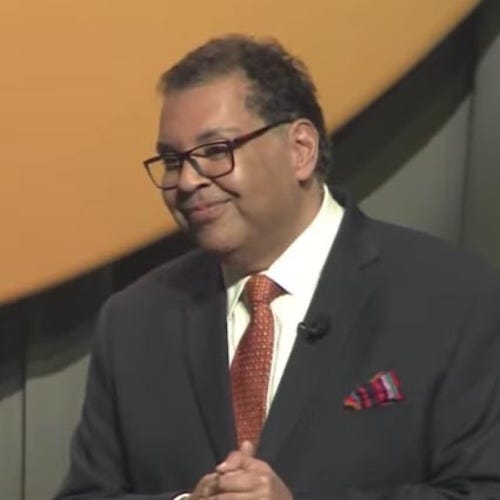
Larry Marshall
I spent a day recently with my great long-time friend Larry Marshall. Larry grew up on a successful family farm in Saskatchewan. A core value of that farm family was rooted in the co-op tradition where farming was less corporate, more cooperative and collaborative. His father was a vice president of the Saskatchewan Wheat Pool and so Larry was raised in the traditions of family farming as a way of life. I was used to farm families in my world being very conservative in their approach to farming. My uncle stayed in his lane. He was a grain farmer who seeded, tended, harvested, and sold grain. I smile trying to imagine any of my former farm employers reading a book about agriculture, attending an organic seminar, or even attending a farm product show. Not an ounce of curiosity in those rigid old men.
Larry on the other hand, not only stepped out of his lane, he took his work boots down more lanes than I can list here. He was one of the first graduates of the B. Allan Mackie School of Log Building and today there are many lovely log homes on the prairie built by Larry. He was the first farmer I knew to make the whole of his land organic and that is not an easy process. He was constantly visiting the folks at the university to fill his head with what was new. He formed a reggae band with some of his farm neighbours that became well known around the province. He planted a forest in one of his sections. He tried all kinds of new crops including rhubarb (not so much) and hemp (big time now). He worked with organic farmers in China, Africa, Costa Rica and Cuba, learning and teaching all the time.
There is so much more to Larry but know this, he was a continuous learner. He had a job, but he also lived for so many other unique practices off the corner of his farm desk. Most important, he led from sideways. He could have been a big shot in the local community, a force in provincial politics or a board member of any farming organization, but he chose to help develop young farmers and leaders all over the world.
He chose to practice his leadership from where he stood and to be a local figure of influence not power. I learned so much from this guy.
An influencer indeed.

Ian Chisholm
Chiz, another farm boy.
I was not that deep into my leadership and engagement practice at the time, but I was starting to soak up anything I could find on learning organizations. So, I took advantage of a learning organization seminar in Toronto, where to my delight, the seminar leader led from a grand piano bench. To this day, I envy that ability to combine your leadership practice with an artistic practice. The really big moment for me however, was during the introductions, when Ian Chisholm met Bob Chartier. Been looking for you for some time, says Ian.
He grew up in Maidstone, Sask. on a family farm that was a scant forty-five minutes from where I grew up in Battleford. It was an instant Saskatchewan bonding. He had just come home to Canada, settling in Victoria, having just completed a stint as CEO of a leadership centre on the Isle of Skye. Not a lot of twenty-six-year-olds get chosen to head up a large leadership organization.
Not a lot of twenty-six-year-olds should.
They made a good choice. He did a fine job and now has the credibility to share the practice he learned from leading in a tough situation. His Roy Group practice, named after his grandfather, has a well-deserved reputation.
Ian had a big influence on my own emerging practice.
For example, he had a disciplined approach to even the small details, such as how to lay out articles on a table. My slacker approach took notice. He treated clients as guests and made learning into a special time. I knew nothing of this.
His biggest gift to so many of us was his Feedback Tool. This little triad of “Went Well, Trickies, and Do Differents” became a daily working tool for anyone in Ian’s orbit.
Ian has built a thriving coaching practice in both the public sector and the entrepreneurial side of the private sector. I especially enjoyed how he applied some artistic flavour to his practice by taking his seminars over to a tennis court. There he would build the learning into the swing of a racket. Anne Marie, his life and business partner, brought the same artistic flair into her practice of conflict resolution.
She would use puppets and masks! Again, art in practice.
Ian has now taken his practice up a notch. His book, Quiet Champions, has us all taking a better look at the world and practice of mentoring. I love that he has gone with the old school word mentor instead of the more modern jargon of influencer. I suppose when I look at the folks in this essay who were a big influence on me, I am struck by how much younger many of them are compared to myself. I grew up thinking that mentors were just those older and wiser. Thanks to Ian and so many of the young practitioners I got to work with, I found that a good mentor is not bound by age, but indeed they are in your life with some wisdom and counsel.
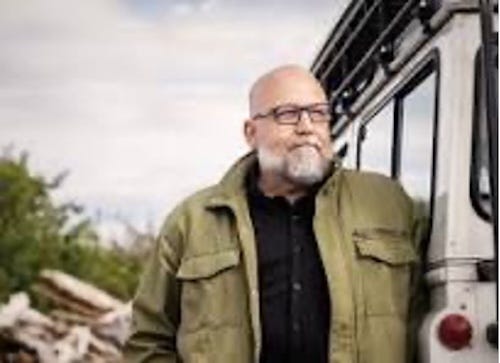
Karen Bonner
Lucky me. I got to do a ton of real engagement work with an influencer as a workplace partner.
Karen was a federal government manager who could see the value in practice-based leadership very early in the game. She became both an engagement practitioner and a coaching practitioner and truly was the one who put wheels on the car in this work. She taught me how to build a practice through due diligence, great process design and relationship rather than action driven work.
Karen brought so much to the handiwork, but her Relationship/Possibility/Action model was the biggest for me. I was an action, get-it-done guy until she sat me down and taught me that action without relationship has no commitment and action without possibility has no innovation and creativity.
She also taught me and so many young practitioners how to deal with negative people, and her Red Tomato model is priceless. You cannot turn a tomato ripe; she would say, it has to get there on its own. So, if you encounter a frustrated green tomato at work, stop trying to change them, go around the green ones and look for a red one and start to gather them into your own community of practice.
Karen’s big gift was her commitment to good process design. She gave every session the gift of artful design rather than plodding agendas.
Karen also taught me to better appreciate the art and practice of coaching. She brought coaching into the frontline corner-of-desk world when it had more resided at the top-of-ladder world. There are a lot of valuable coaching practitioners out there thanks to Karen.
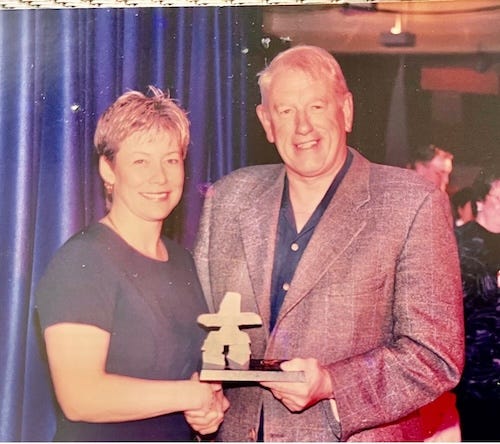
Moving Sideways, through the years
As a young worker I often heard others say that their jobs were so onerous that they had to do a certain piece of work “off the corner of their desk.” Usually that turn of phrase came out rather negative. However, I began hearing the phrase a little differently as I studied Learning Organization Theory, tool-based practice and handcrafted engagement.
I knew that my work would always have all the restrictions and rules that come with a job. You have to learn to live with job descriptions, compliance, hierarchy, credentialism, performance measurement, bureaucracy and the hard-cold covering of the crust of reason (kids in college, mortgage). We all are or should be grateful for a job, especially now. I have no real truck with those who say we can change the nature of jobs; jobs are owned by the organization, not us. Some jobs are wonderful, some ordinary and some just suck, but we are grateful for work.
The job, of course, is the gateway to the ladder leadership model. Do well on the job and you get to know and climb the rungs.
I also noticed something else thirty years ago. There were a lot of topics needing attention in my organization that did not fit into any job description. Things like:
· Charitable activities
· Engagement tools
· Coaching
· Conflict resolution
· Ethics
· Emergency preparation
· Social media skills
· Public speaking
· Work life balance
· Mental illness
· Strategic planning
· Diversity
· Fitness
· Writing
· Service standards
· Team building
· Facilitation
And on and on and on.
There was a lot of stuff going on here and pretty cool stuff at that. There were actually some things that I wouldn’t mind doing, truth be told. So, who was doing it? Well, there was the inside piece and the outside piece.
Inside, we had the ubiquitous committee approach. Committee work was voluntary without a lot of carrots. In fact, the phrase voluntold implied more stick than carrot. I don’t remember a lot of folks holding their breath waiting for a spot to open up on a committee. This was inside stuff.
Outside, much of these cool efforts went, of course, to outsiders. I recall a lot of contractors coming through the doors to facilitate us, coach us, workshop us, strategic plan us, conflict resolve us, time manage us, diversify us, team build us and ethics us. There was more but…
I saw my opening.
I learned some engagement tools, hung out my little entrepreneurial shingle on the corner of my desk and waited. I pitched my skills to my boss, but he was in love with a contractor, so it took a while and another manager with no budget, to finally see some opportunity in me. The first time I left my real job on a Thursday morning to facilitate a Team Charter session with a finance team in the afternoon, I knew that “the corner of the desk” could have a much more interesting meaning for me.
Engagement, my practice
We have come a long way on our journey to this word engagement. I was hired as a young man, in the 70’s, to put together, with some really bright folks, a program of public participation, for the first major environmental study in this country, the Churchill River Study. We had no idea what we were doing. We wrote, we spoke, we listened, but the tools were old, and I am not sure the public felt participated at all.
In later decades, we buried deep into the word consult, and we dutifully trotted the PowerPoint presentations into all sorts of large and small communities who wondered when we might stop talking and consulting and start listening. It was only with some personal engagement tools like the Feedback Model (thanks Ian Chisholm), the 12 Minute Interview, and the Spider Accountability Tool (thanks Karen Bonner), that we started to realize engagement was different from public participation and consultation. Then we found team engagement tools like the Charter, the Stand-up and the Preventive Maintenance tool that strive to bring teambuilding out of the workshops and into daily practice. The whole systems engagement tools like the OpenSpace, the World Café and the Press Conference finally really broke our mental models and took us into the world of conversations across silos and into the big conversations that organizations need in a modern knowledge-based world. We knew that the real intelligence in organizations was in the big rooms, not necessarily the boardrooms.
The really big idea finally dropped when we finally realized that consultation was an event-based process and engagement was a continuous, everyday process.
So, today…
The work continues. Thousands of public servants and other workers are exploring or are in full flight with their corner-of-desk practices. There are thriving communities of practices across the country. There are professional consultants who see their main challenge to help organizations and create deep sustainability, and they choose not to do the work themselves but to train and develop front line workers to be that fully sustainable force for leadership, engagement and change in their own organizations.
Finally, the core of Sideways Leadership is not based on a few reaching the top of a leadership ladder but thousands of front-line leaders moving practice-based practical leadership across and through our organizations every hour of every day.
And yes, it’s true, a leader’s true job is to create more leaders. We do this by challenging everyone to find their entrepreneurial practice and subsequently their unique and important voice.
There are many more sources of good practice thinking, but these particular folks above and so many others, were big influences in my evolving engagement practice. At the same time, I had jobs. In order for the world of practice to flourish you need great managers and leaders of organizations who give you their sanction and some good work to do. Thank you, Doug Konkin, Shelley Sullivan, Jocelyne Bourgon, Garry and Wayne Wouters, Peter Harrison, Richard Rochefort, Scott Serson, John Watson, Geoff Munroe, Jamie Jeffreys, Rachael Pollard, Ian Chisholm, Graham Dixon and my old Royal Roads team, Alison Bond, Rebecca O’Brien, Earl Ermine, Mike Nurse, Dave Francis, Bonnie Johnstone, Gian-Carlo Carra, Paul Brandt, Kelly Lendsey, Laurie Pushor and there were so many others as well, but my memory is Swiss Cheese. Tasty but with holes.
Thank you all, you know who you are.
In conclusion, Doug Konkin was a Deputy Minister of Forestry who saw the potential in Sideways Leadership and when I asked him why, his reply was simple but profound. He said he imagined how amazing it would be to be the deputy of an organization where 3500 people had a job and the same 3500 people had a leadership practice at the corner of their desk.
Indeed.
Thanks Doug and thank you every manager, every practitioner and every colleague, who invited me into the room knowing full well that it indeed might go sideways, and often it did.
A final thought...
Polls are showing that one in three preteens, when asked what they want to be when they grow up, say they want to be an influencer. This makes no flippin sense! The people I have acknowledged in this piece were a big influence on me and thousands of others. They did not set off in life to be influencers. They set off in life to do some good work. The work they did was so good that they influenced people. You can’t do this stuff backwards!
The kids may need a little straight talk on the word influence. As Robert Frost and many of us have said, it is a gift word. You must be gifted it from someone who sees it in you, not just your own naked ambition looking back at you from your steamed-up bathroom mirror.
Do some good work and the world will let you know if they were influenced by you.
Bob thanks for sharing, I think sideways leadership is misunderstood but so impactful.